서브메뉴
검색
Free will and predestination in Iislamic thought : theoretical compromises in the works of Avicenna, Gha?za?li? and Ibn 'Arabi?
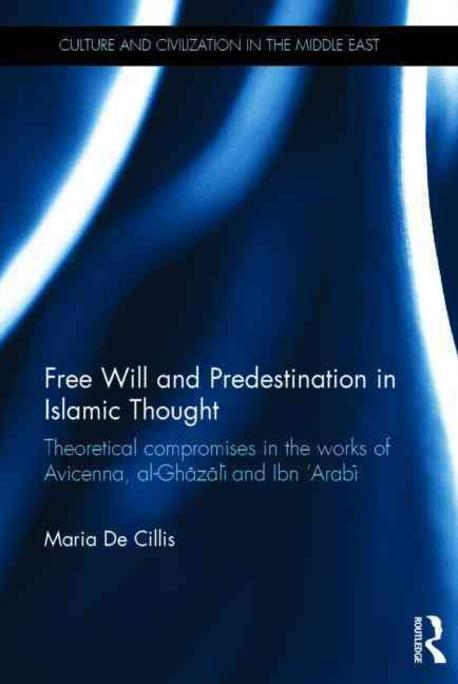
Free will and predestination in Iislamic thought : theoretical compromises in the works of Avicenna, Gha?za?li? and Ibn 'Arabi?
상세정보
- 자료유형
- 단행본 서양서
- 최종처리일시
- 20141205153558
- ISBN
- 9780415662185 (hardback)
- DDC
- 297.227-22
- 청구기호
- 297.227 D278f
- 서명/저자
- Free will and predestination in Iislamic thought : theoretical compromises in the works of Avicenna, Gha?za?li? and Ibn Arabi? / by Maria De Cillis
- 발행사항
- London : New York, 2014
- 형태사항
- 259 p ; 24 cm
- 총서명
- Culture and civilization in the Middle Eeast
- 서지주기
- Includes bibliographical references (pages 235-251) and index.
- 초록/해제
- 요약"The subject of "human free will" versus "divine predestination" is one of the most contentious topics in classical Islamic thought. By focusing on a theme of central importance to any philosophy of religion, and to Islam in particular, this book offers a critical study of the intellectual imports offered to this discourse by three key medieval Islamic scholars: Avicenna, Gha?za?li? and Ibn Arabi?"--해제Provided by publisher.
- 초록/해제
- 요약"The subject of "human free-will" versus "divine predestination" is one of the most contentious topics in classical Islamic thought. By focusing on a theme of central importance to any philosophy of religion, and to Islam in particular, this book offers a critical study of the intellectual contributions offered to this discourse by three key medieval Islamic thinkers: Avicenna, Gha?za?li? and Ibn Arabi?. Through investigation of primary sources, Free Will and Predestination in Islamic Thought establishes the historical, political and intellectual circumstances which prompted Avicenna, Gha?za?li? and Ibn Arabi? attempts at harmonization. By analysing the theoretical and linguistic 'techniques' which were employed to convey these endeavours, this book demonstrates that the three individuals were committed to compromise between philosophical, theological and mystical outlooks. Arguing that the three scholars' treatments of the so-called qad?a? wa'l-qadar (decree and destiny) and ikhtiyar(free-will) issues were innovative, influential and fundamentally more complex than hitherto recognized, this book contributes to a fuller understanding of Islamic intellectual history and culture and will be useful to researchers interested in Islamic Studies, Religion and Islamic Mysticism"--해제Provided by publisher.
- 일반주제명
- Islamic philosophy History
MARC
008140314s2014 enk 001 eng■001SBU00084028
■00520141205153558
■007ta
■010 ▼a2013021659
■020 ▼a9780415662185 (hardback)
■040 ▼a211074
■08200▼a297.227▼222
■090 ▼a297.227▼bD278f
■1001 ▼aDe Cillis, Maria.
■24510▼aFree will and predestination in Iislamic thought▼btheoretical compromises in the works of Avicenna, Gha?za?li? and Ibn 'Arabi?▼cby Maria De Cillis
■260 ▼aLondon▼bNew York▼bRoutledge▼c2014
■300 ▼a259 p ▼c24 cm
■440 0▼aCulture and civilization in the Middle Eeast
■504 ▼aIncludes bibliographical references (pages 235-251) and index.
■520 ▼a"The subject of "human free will" versus "divine predestination" is one of the most contentious topics in classical Islamic thought. By focusing on a theme of central importance to any philosophy of religion, and to Islam in particular, this book offers a critical study of the intellectual imports offered to this discourse by three key medieval Islamic scholars: Avicenna, Gha?za?li? and Ibn Arabi?"--▼cProvided by publisher.
■520 ▼a"The subject of "human free-will" versus "divine predestination" is one of the most contentious topics in classical Islamic thought. By focusing on a theme of central importance to any philosophy of religion, and to Islam in particular, this book offers a critical study of the intellectual contributions offered to this discourse by three key medieval Islamic thinkers: Avicenna, Gha?za?li? and Ibn Arabi?. Through investigation of primary sources, Free Will and Predestination in Islamic Thought establishes the historical, political and intellectual circumstances which prompted Avicenna, Gha?za?li? and Ibn Arabi? attempts at harmonization. By analysing the theoretical and linguistic 'techniques' which were employed to convey these endeavours, this book demonstrates that the three individuals were committed to compromise between philosophical, theological and mystical outlooks. Arguing that the three scholars' treatments of the so-called qad?a? wa'l-qadar (decree and destiny) and ikhtiyar(free-will) issues were innovative, influential and fundamentally more complex than hitherto recognized, this book contributes to a fuller understanding of Islamic intellectual history and culture and will be useful to researchers interested in Islamic Studies, Religion and Islamic Mysticism"--▼cProvided by publisher.
■650 0▼aFree will and determinism▼xReligious aspects▼xIslam
■650 0▼aIslam▼xDoctrines▼xHistory
■650 0▼aIslamic philosophy▼xHistory
■985 ▼aSB35▼lE025979
■990 ▼a송현진▼b송현진
미리보기
내보내기
chatGPT토론
Ai 추천 관련 도서
책소개
The subject of "human free will" versus "divine predestination" is one of the most contentious topics in classical Islamic thought. By focusing on a theme of central importance to any philosophy of religion, and to Islam in particular, this book offers a critical study of the intellectual imports offered to this discourse by three key medieval Islamic scholars: Avicenna, Ghazali and Ibn Arabi.

